Sound familiar?Toronto
- The call
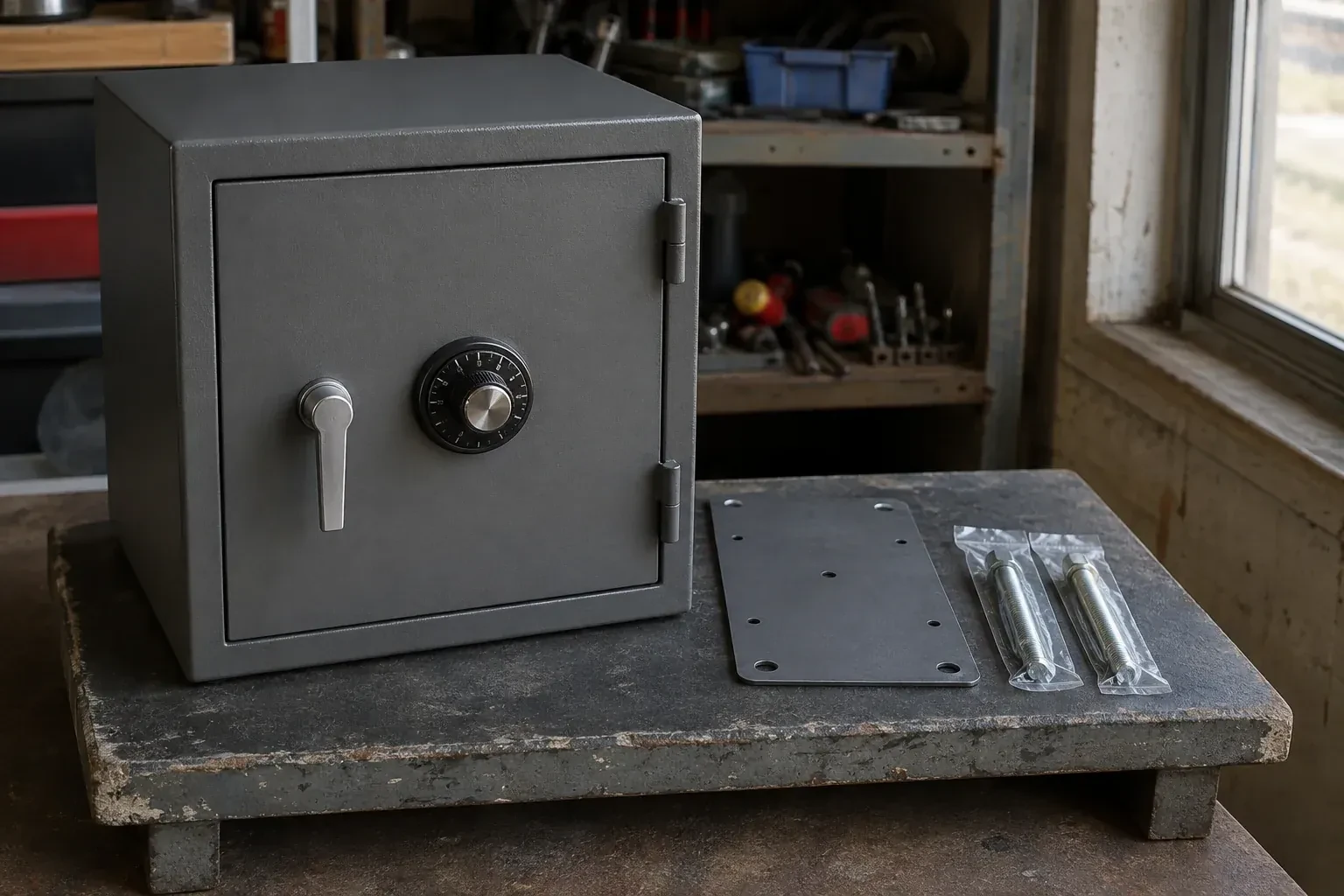
- A customer's rifle safe at the range has a dial that simply will not respond to the combination written on the sales receipt from years ago.
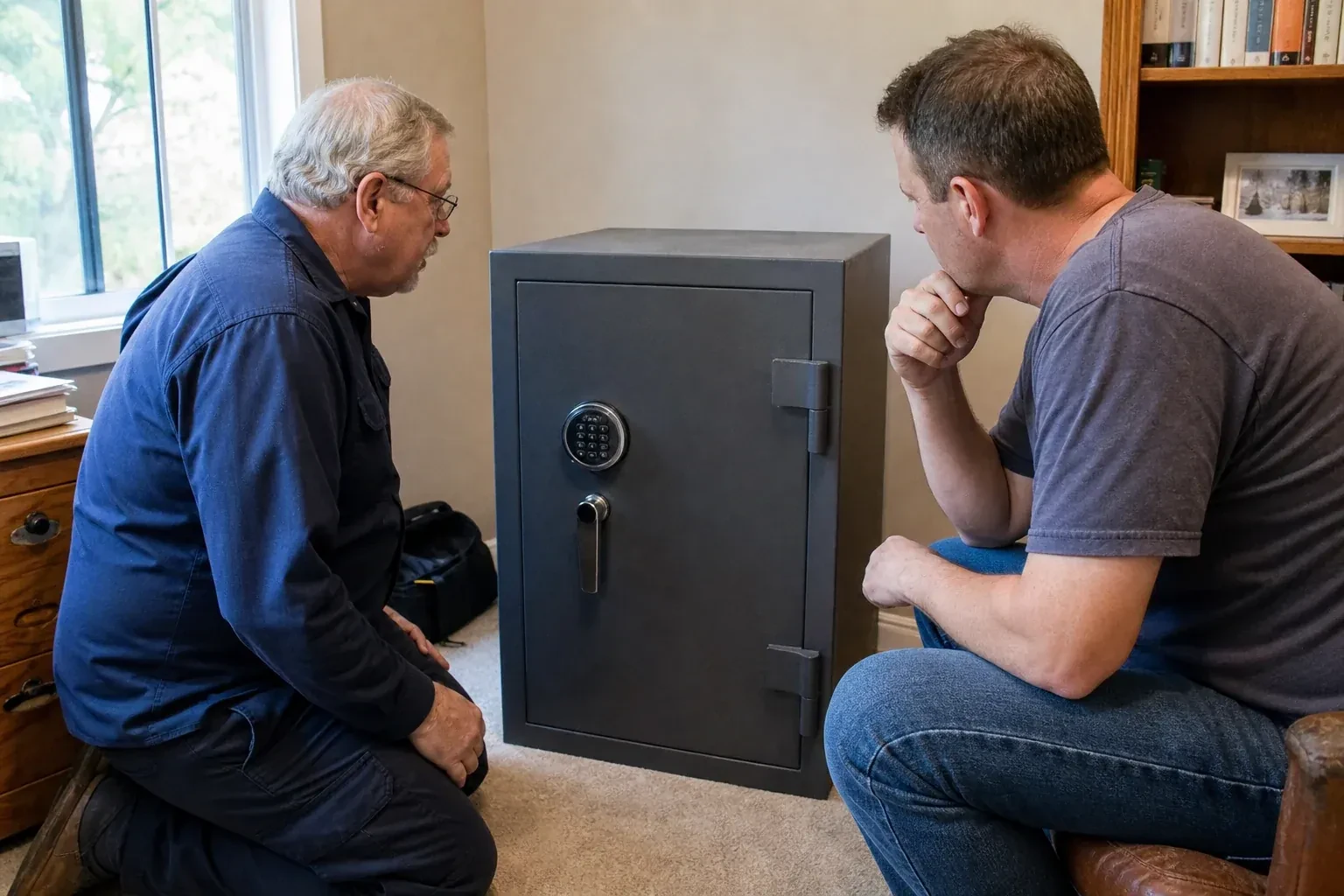
The new manager took over the shop last month and only now needs the back-office safe open, but the combination the previous owner was supposed to leave in writing never turned up anywhere in the handover file.
Changing a combination is not only for a safe that has stopped opening. Businesses routinely have a working safe recombined the moment someone who knew the old code leaves, retires or changes roles, because a combination known outside the current staff is a loose end worth closing on its own. The visit is short when the safe already opens fine: confirm authority, dial or key in the old combination, set a new one, and test it before anyone signs off on the work.
Sound familiar?Toronto
Safe Opening & Combination Change · Toronto
Scene 1
A safe's data plate, when it survives, often carries more than a model number: many list a UL security classification for the lock itself, information that tells the locksmith what level of manipulation resistance to expect and what tools the job calls for. Any paperwork the owner still has, a purchase receipt, a service record from a previous visit, or a manual tucked in a drawer, adds detail that speeds up identification. Where none of that survives, the locksmith builds the same picture by reading the hardware directly, just with a few extra minutes spent confirming what the plate would otherwise have said.
Scene 2
When manipulation, decoding and the electronic reset path all fail to open the safe, drilling is explained to the owner before it begins, aimed at a specific point the lock manufacturer's own service documentation identifies as both reachable and safe to repair afterward. A borescope is used through the drilled hole to view the lock's internal parts directly and manipulate or bypass them without further damage. The aim is to affect nothing beyond that single hole, patched or plugged as one of the last steps of the visit, though the number of holes needed and any effect on the safe's rated protection level depends on its construction and is addressed with the manufacturer's approved repair method.
Scene 3
Most safes that needed a reset today will need one again eventually, whether from a future staff change, a forgotten code, or simple wear on an aging lock. Deciding now who is responsible for passing the combination along when roles change, keeping a written record somewhere secure, and having the safe's model and service history noted somewhere accessible all make the next visit shorter and simpler than this one. None of this is required before the locksmith leaves, but a few minutes spent on it now is the difference between a short reset next time and starting from an unknown safe all over again.
What shapes the quoteBloordale Gardens Lock & Key Co.
FeesSame any hour
Each suits a different way of working. A mechanical dial has no battery to fail and a long service life, but only ever holds one combination at a time. An electronic keypad allows separate codes for different staff and an audit trail on some models, at the cost of needing battery changes. Either can be fitted with a genuinely high security rating; the choice usually comes down to how many people need independent access.
Many electronic locks support more than one user code, so a manager and one or more backup employees can each be set up separately during the same visit rather than sharing a single combination. A mechanical dial only holds one combination at a time, so multiple access there means agreeing who holds it and how that changes when staff do.
It is closed with a repair plug or patch plate matched to the case material and finish before the visit ends, aiming to leave one small, professionally finished repair rather than an open hole, with the exact result depending on the safe's construction and the approved repair method used. If the drilled point affected the safe's original security rating, that is explained plainly, along with whether the replacement lock restores it to its prior level.
TorontoOntario
Safe Opening & Combination Change · Bloordale Gardens, Eringate, Etobicoke, Glen Agar, Islington, Princess Margaret, Thorncrest Village, West Deane Park
Every square is one home in a hundred.
On-site assessment
The new manager took over the shop last month and only now needs the back-office safe open, but the combination the previous owner was supposed to leave in writing never turned up anywhere in the…
(289) 804-4797, open 24/7.
On-site assessment preferred · (289) 804-4797, open 24/7