Skip to content
BloordaleGardens Lock & Key Co.Open 24/7 (289) 804-4797
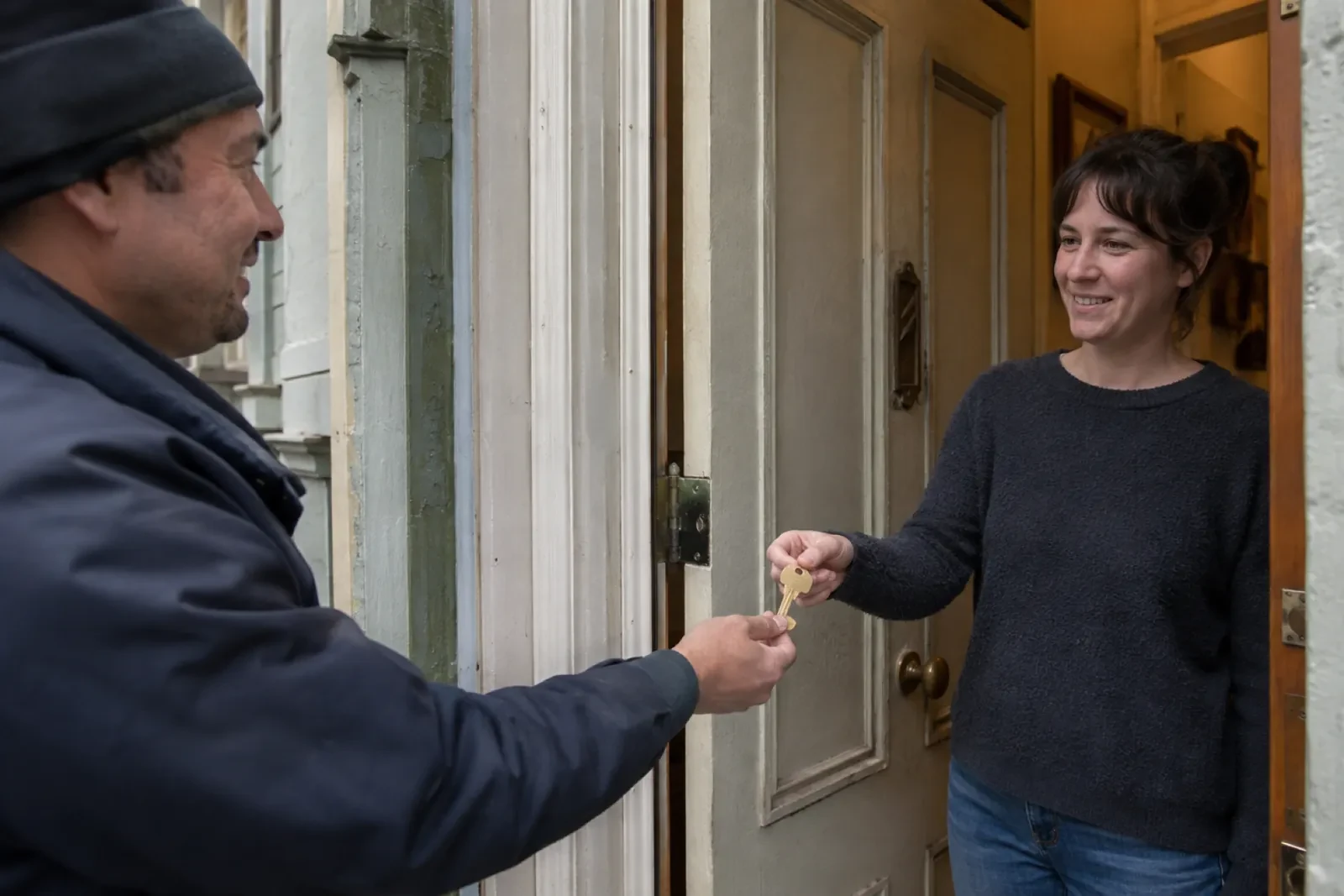
Person in a dark cap handing a brass key to a smiling person in the open doorway of a pale green door. — Home Lockout Service, Toronto

Lockouts · Toronto

Home Lockout Service

You stepped out to grab the recycling bin and the door swung shut behind you. Through the glass you can see your keys hanging on the hook by the stairs, exactly where they always are, and the latch has caught.

In plain words

Where your key is decides most of what happens after the door opens. If it is sitting on the counter inside, the job is simply to open the door and hand the house back to you with the lock untouched. If the key has been lost somewhere in town, opening the door solves tonight but leaves a working key in circulation, so the sensible follow-up is to rekey the cylinder to a new key while the locksmith is already there. Either way the service begins with confirming you belong at that address and ends with a door that locks and unlocks normally.

Sound familiar?Toronto

The call
Someone pushed the privacy button on the bathroom door and pulled it shut behind them, leaving the room locked and empty. The little emergency slot on the outside is stripped, and the tiny release key that came with the handle disappeared years ago.
NextHow the visit goes

Home Lockout Service · Toronto

How the visit goes

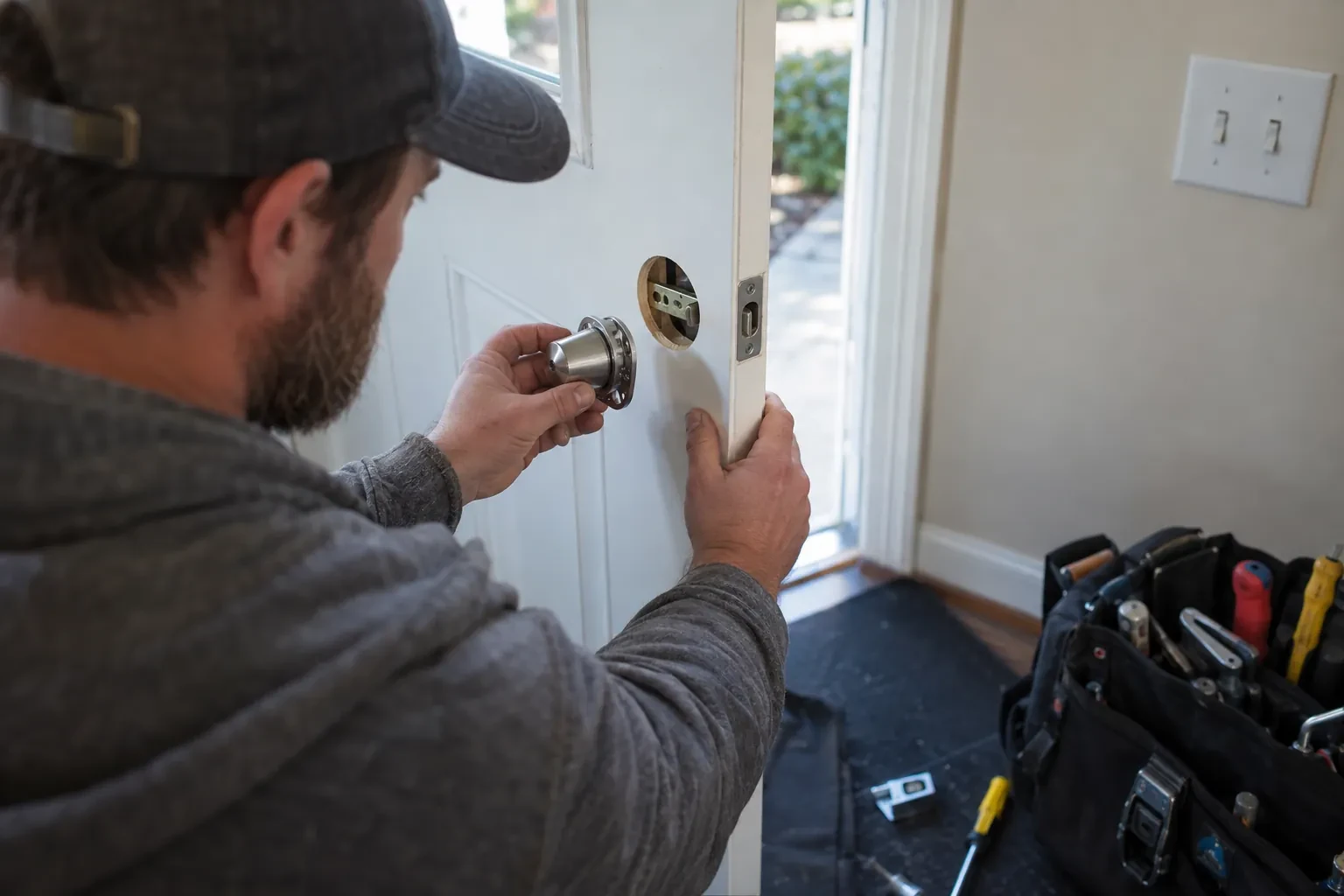
Technician holding a steel deadbolt to the round bore in a white door, with an open tool bag on a dark mat.
  1. Scene 1

    Is it the lock or the door?

    A surprising number of lockouts are really door problems. The locksmith checks how the door sits in its frame: whether it has dropped on tired hinges, swollen with summer humidity, or shrunk in dry winter air so that the bolt no longer lines up with its pocket in the strike plate. A hand on the door while the key is turned often reveals the bolt binding against the strike rather than a failed cylinder. Sorting this out first matters because a door that is pinched in its frame needs pressure relieved, not a lock picked, and the fix afterwards is a strike adjustment or a hinge screw rather than new hardware.

  2. Scene 2

    Relieving a bound door

    When the bolt is jammed against the strike because the door has swollen or sagged, picking achieves nothing until the pressure comes off. The locksmith lifts or leans on the door to bring the bolt back into line with its pocket while the key or pick turns the cylinder, and the bolt slides home. With the door open, the cause is addressed so it does not lock you out again: tightening or shimming a hinge that let the door drop, dressing the strike pocket so the bolt has room, or trimming a weatherstrip that pushes the door out of square. The lock was never the problem; the door simply moved around it.

  3. Scene 3

    Ready for the next cold snap

    After a winter lockout you leave with a cylinder that has been dried and dressed with a moisture-shedding lubricant, and usually a small tube of lock de-icer for the glove box or coat pocket. Keeping the storm door closed shields the main lock from freezing rain, and a simple keyhole cover on an exposed side door stops meltwater getting in during a thaw. If the door itself was frozen to its seal, the weatherstripping has been cleared and a light silicone wipe on it stops it bonding to the door again. These small habits carry most households through a whole season of freeze and thaw without another stuck morning.

In the van

  • Plug spinner
  • Broken key extractors
  • Strike plate and long hinge screws
  • Nine-volt battery for smart locks
  • Plug follower and repinning kit

What shapes the quoteBloordale Gardens Lock & Key Co.

How many locks need opening
One front door is the simplest case. A front door plus a garage man-door, a storm door that latched and a mailbox in the lobby is a longer visit with more hardware to work through.
Type and grade of the lock
A builder-grade knob latch, a residential deadbolt, a mortise case in an older home and a high-security cylinder each take different tools and different amounts of time to open, and that difference shows in the quote.
Keying other doors to match
Bringing the back door, side door and garage onto the new key after a rekey is extra work per cylinder, and simplest to arrange during the same call-out.

FeesSame any hour

Have it ready

Before you call · 0 / 3

(289) 804-4797

Questions people ask us

I am a landlord. Can you open a unit my tenant is living in?

A locksmith will want to understand the situation first, because a tenant's right to their home is protected and a lockout of a tenant is something only a sheriff enforcing a Landlord and Tenant Board order may carry out. Legitimate reasons do come up: a tenant has asked you to let them in, a vacated unit needs securing, or an emergency requires access. Bring ownership records and be ready to explain the circumstances, and the locksmith will help you handle it properly.

Is a double-cylinder deadbolt a good idea after a lockout?

A deadbolt keyed on both sides is sometimes suggested for doors with glass beside them, but on a main escape door it means finding a key to get out. A door people use to leave the home should open from the inside without a key or special knowledge, especially in an emergency. A single-cylinder deadbolt with a thumb-turn, paired with a reinforced strike and a proper glass film if needed, keeps both security and a clear way out.

I rent my place. Can I call a locksmith myself?

Yes. A tenant locked out of their own unit can arrange entry directly, and the identification check is the same: something that ties you to the address, such as a lease, a bill or a piece of mail, plus photo identification. Where you may want to involve your landlord is any change to the lock afterwards, because tenancy rules in this province expect landlords and tenants to agree on lock changes and to share keys. A locksmith can note what was done for the building manager.

Torontoinformation

TorontoOntario

Town
Toronto
In business
13 years
Hours
Open 24/7
Nights, weekends and holidays, same fees
Visits
On-site assessment preferred. Request a visit or call.

2021 census: what it means at the door

Every square is one home in a hundred.

  • 58 in 100 homes · older homes
  • About 58% of homes in Toronto were built in 1980 or earlier, according to the 2021 Census.Older homes tend to have had many hands on their doors: owners, tenants, tradespeople, family. A locksmith visiting such a house pays attention to who holds keys now, and rekeying or a keyed-alike set often matters more than any new hardware.
  • Single-detached houses make up about 23% of homes in Toronto (2021 Census).Shared entrances mean fobs, intercoms and buzzers alongside conventional locks. A locksmith can service the mechanical side of those doors and advise on how the fob system and the cylinder work together when management asks.

Source: Statistics Canada, Census Profile

Open Toronto in Google Maps

On-site assessment

Request a visit.

You stepped out to grab the recycling bin and the door swung shut behind you.

(289) 804-4797, open 24/7.