Sound familiar?Toronto
- The call
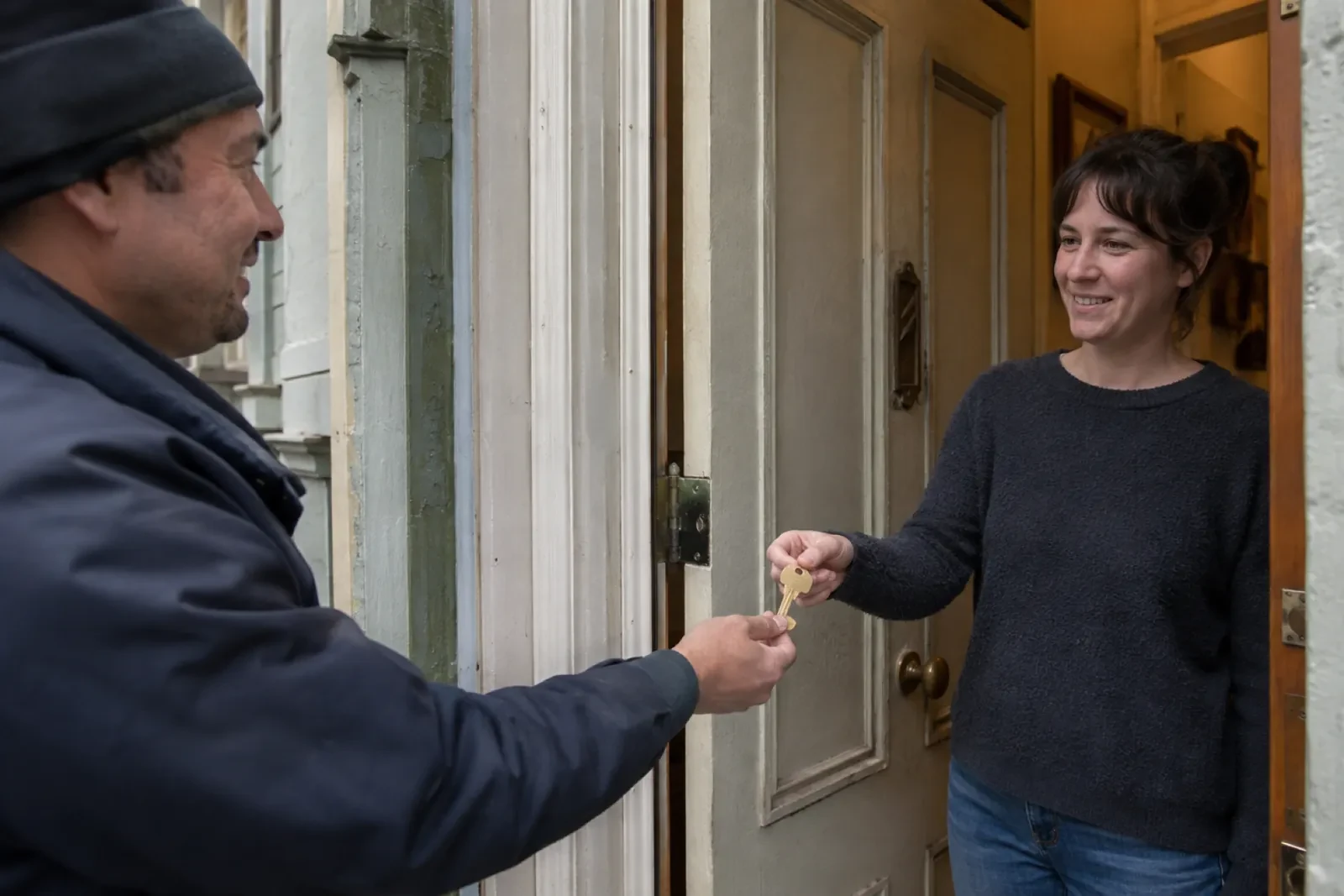
- The old mortise lock on the front door of the house turns the key halfway and stops with a dull clunk. It has been getting harder for months, and the brass key is starting to show a bend.
The shop's lever handle goes down as usual, but the latch inside the mortise case never pulls back. Staff are waiting on the sidewalk with their coffees, the door is locked, and the handle is simply moving air.
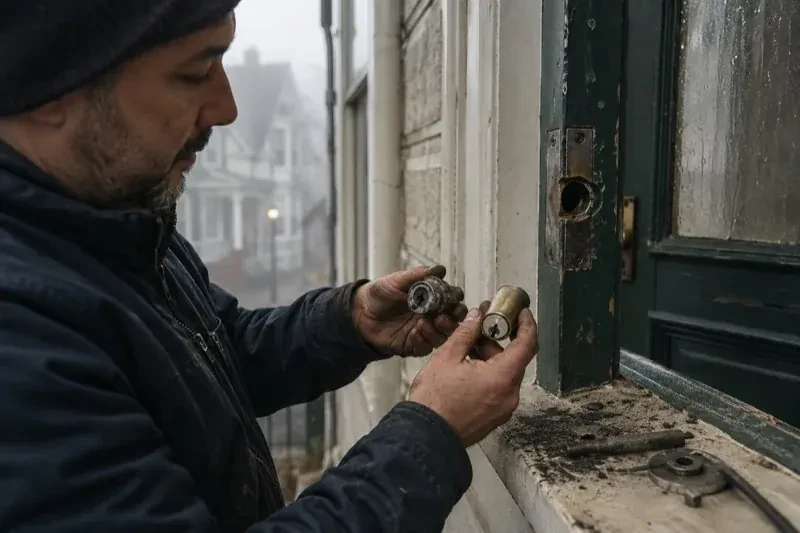
When the cylinder is the part that has seized, the work is about cleaning rather than force. Keyways collect dust, salt spray, metal filings and residue from sprays never meant for locks, and over time the pins stop lifting cleanly. The locksmith flushes the plug with a contact cleaner, applies a penetrating lubricant, and works the key in small movements until the plug turns. With the door open the cylinder comes out, is stripped and cleaned, gets fresh springs or pins where worn, and is dressed with the lubricant specified for that cylinder. A plug or shell that is worn, damaged or eaten through by corrosion is what gets replaced.
Sound familiar?Toronto
Seized & Jammed Lock Opening · Toronto
Scene 1
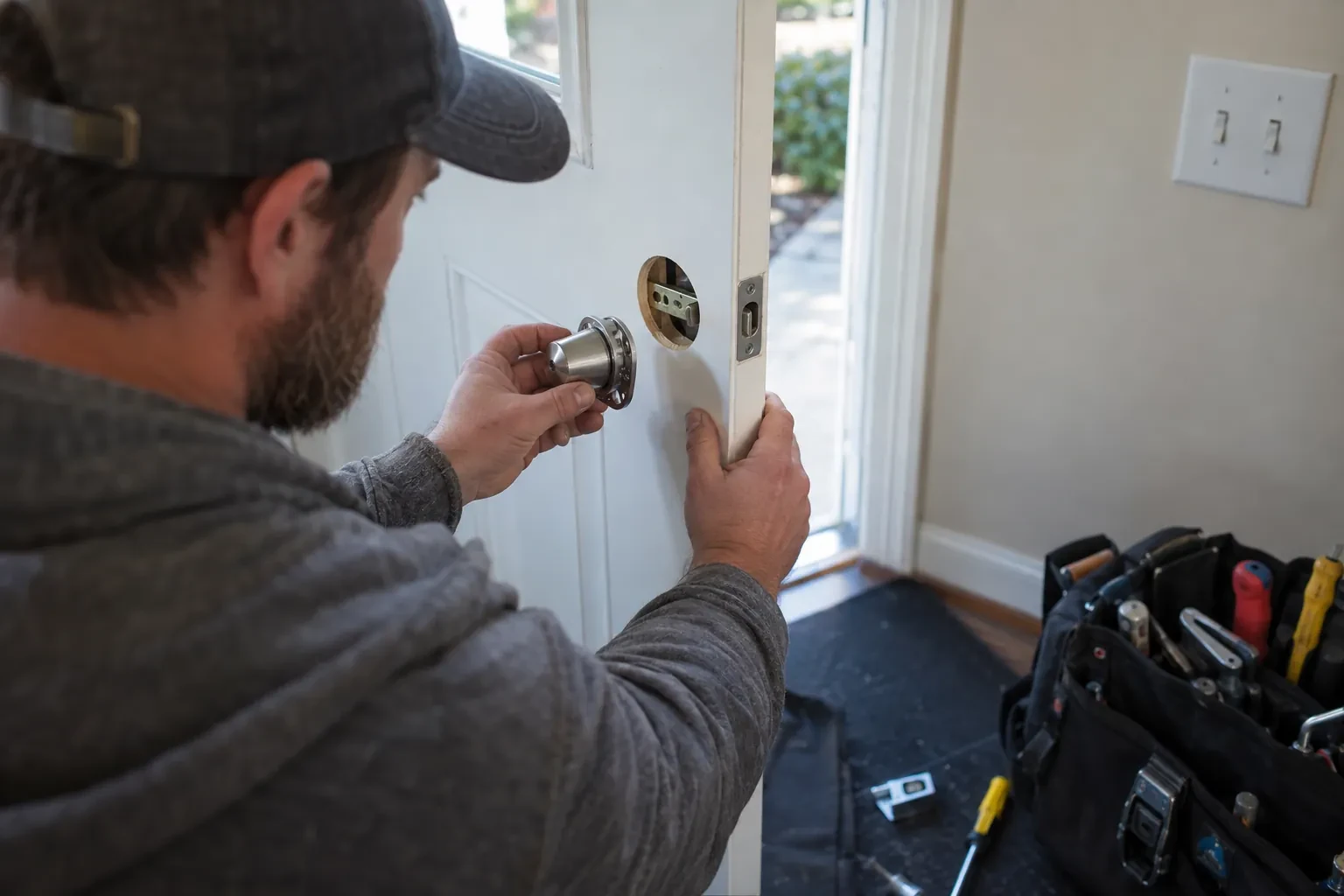
The frame side gets as much attention as the door side. The locksmith looks at where the bolt meets the strike plate: scuff marks on the plate's edge, a bolt pocket shallower than the roughly twenty-five millimetres a deadbolt needs, paint or filler that has crept into the pocket, and weatherstripping thick enough to hold the door proud of the frame. A dab of chalk on the bolt end shows exactly where it lands. These findings explain a lock that works with the door open and jams when it is shut, and they point to a chisel, a screwdriver and a strike adjustment rather than to anything inside the cylinder.
Scene 2
Occasionally the plug or shell has rusted or pitted past the point of cleaning, or an earlier forcing has twisted the plug in the shell. Then the cylinder is replaced rather than rebuilt. The locksmith matches the keyway and finish so the new part looks like the old one, and where the keyway allows, pins the new cylinder to the key already on your ring so nothing else in the house changes. If the whole lockset is tired, a replacement deadbolt or lever set goes on in the same visit, with the strike checked to suit it. The old parts are handed over so you can see exactly what failed.
Scene 3
Where a worn or drifted key was part of the jam, you now hold a key cut from the code or from a fresh master, and every spare has been tried in the lock. Retire copies that needed force, and cut future spares from the good key rather than from each other, since each generation of copying adds error. Label the keys if several locks are involved. If the cylinder was replaced and pinned to your existing key, the whole house is still on one key. Keeping a written note of the keyway and, where it exists, the key code makes any future key a simple cut.
What shapes the quoteBloordale Gardens Lock & Key Co.
FeesSame any hour
It depends on which family the jam belongs to. A bolt bound by the door is often freed in minutes and the adjustment afterwards takes a little longer. A seized cylinder needs patient cleaning before it turns and a bench service after, and a frozen one needs thawing time. A tailpiece swap is short once the door is open; a mortise case service is longer. The locksmith gives a sense of the time once the cause is identified at the door.
Yes, with one difference. On an electronic deadbolt the motor is trying to throw a bolt that is bound in the strike, and it strains or times out instead of driving it. Door alignment is a common cause, though batteries, corrosion, an overtightened mounting bolt, or a hardware fault can produce the same strain. The locksmith frees the bolt, adjusts the strike or hinges so it travels without resistance, checks the battery contacts, and confirms the auto-lock throws cleanly with the door closed.
The key and cylinder are doing their job; the bar behind the cylinder that drives the bolt, called the tailpiece or cam, has broken, slipped or twisted out of engagement. It is a small part. The locksmith retracts the bolt through the mechanism or removes the cylinder to reach it, then fits a tailpiece of the right length and profile. Your cylinder and keys are unchanged afterwards.
TorontoOntario
Seized & Jammed Lock Opening · Bloordale Gardens, Eringate, Etobicoke, Glen Agar, Islington, Princess Margaret, Thorncrest Village, West Deane Park
Every square is one home in a hundred.
On-site assessment
The shop's lever handle goes down as usual, but the latch inside the mortise case never pulls back.
(289) 804-4797, open 24/7.
On-site assessment preferred · (289) 804-4797, open 24/7