Sound familiar?Glen Agar
- The call
- The kitchen delivery door gets shouldered open more than a hundred times a shift, and lately the latch slips past the strike plate instead of catching it on the first push.
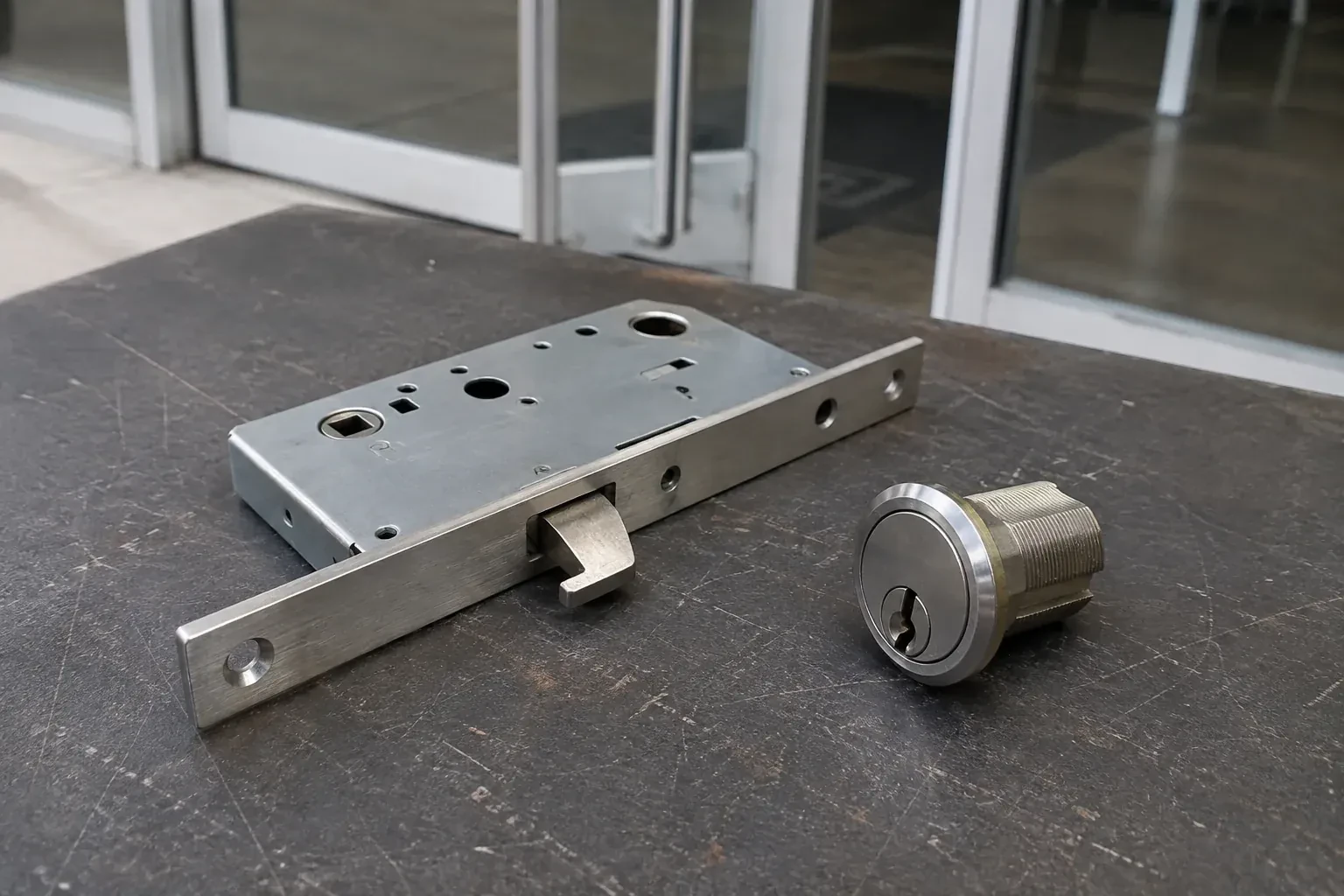
At closing time the hookbolt on the storefront door catches the keeper only on the second or third try, and one employee has started giving the door a shoulder to force it home.
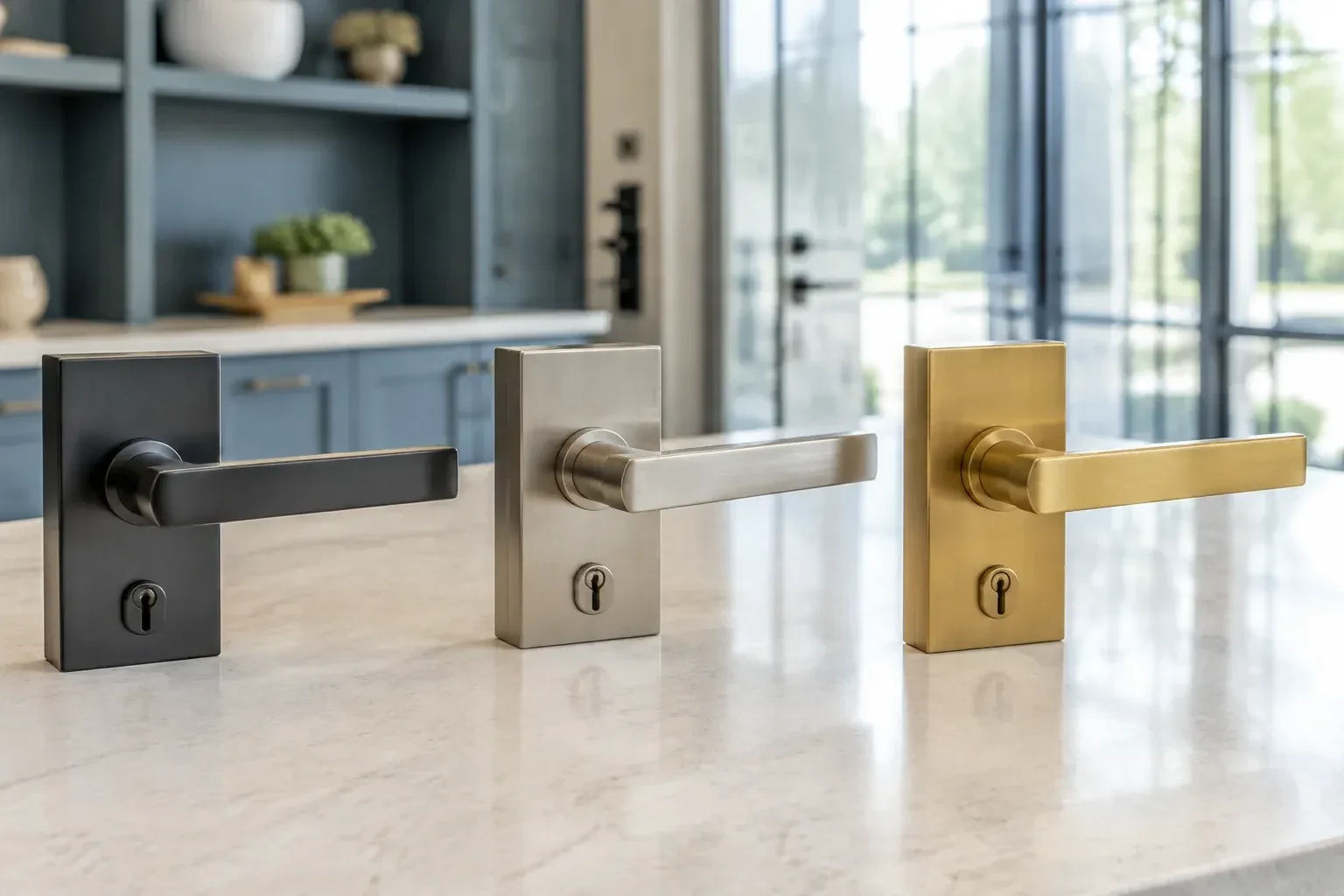
Commercial-grade lock replacement swaps hardware that is worn, damaged, mismatched or simply not rated for a business door with hardware built for that duty: a mortise lock body, a heavy cylindrical lockset, or a narrow-stile lock or hookbolt for an aluminum storefront door. The locksmith reads the door's construction, the traffic the opening takes, and any key or access-control system already running before choosing a replacement. New hardware is keyed into that existing system rather than left to stand on its own, so one business ends up with one coherent set of locks instead of a patchwork of whatever was fitted door by door over the years.
Sound familiar?Glen Agar
Commercial-Grade Lock Replacement · Glen Agar
Scene 1
Every commercial building runs some kind of keying logic, even an informal one, and the locksmith maps it before touching hardware: is this cylinder on the same key as other doors, does it belong to a master or grand-master system, is it a standard keyway or a restricted one that only a specific supplier can cut? Getting this picture first means the new hardware can be ordered to slot into that structure, onto a fresh structure the business wants instead, or left standing alone if that is genuinely what is wanted.
Scene 2
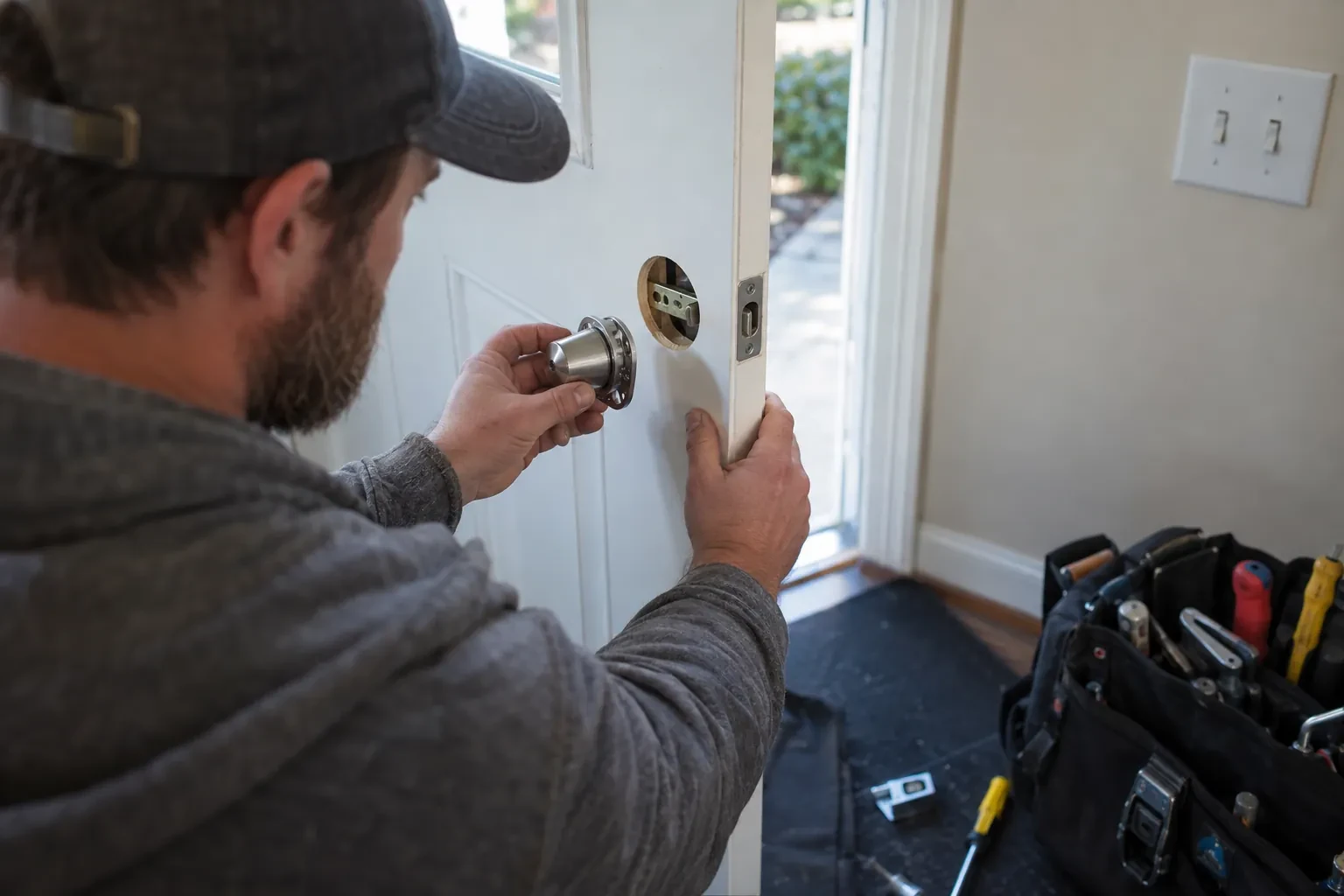
The existing lock, cylinder and strike come out without enlarging the door's mortise pocket or bore, since a clean prep is what lets the new hardware seat correctly. Any hardware that was previously mismatched to the door, an incorrect backset or a strike screwed in at an angle, is noted so the business understands why the last repair may not have held. The old hardware is set aside for the business to keep, dispose of, or use as a reference for other doors still running the same outdated lockset.
Scene 3
If the door carries an electric strike, a maglock or a card-reader tie-in, that hardware has been tested together with the new mechanical lock rather than left to be sorted out separately. The release button, the reader and the mechanical latch now agree with each other, so staff are not shouldering a door that is supposedly already unlocked. Anyone monitoring the door through an alarm panel or access-control software can confirm the contact reports correctly against the new hardware.
What shapes the quoteBloordale Gardens Lock & Key Co.
FeesSame any hour
In most cases, yes. Replacement hardware is chosen to fit the door's existing mortise pocket, bore pattern or narrow-stile prep, so the visit does not usually involve altering the door itself. Re-cutting only comes up when the business specifically wants to change hardware type, for example moving from a knob-and-deadbolt pair to a single mortise lock body.
A grand-master system adds a layer above a standard master key, useful for a business with several buildings or departments where one senior key should open everything and mid-level keys should open only their own area. A single-location business with a handful of doors usually only needs a straightforward master and change-key structure, without the extra layer.
Often, yes, particularly with an interchangeable-core system where the core is designed to be swapped without removing the lock body from the door. Where the lock body itself is worn, damaged or of a grade that no longer suits the door's traffic, replacing the cylinder alone would leave the underlying problem in place, so the locksmith says which option actually fits the situation found.
TorontoOntario
Commercial-Grade Lock Replacement · Toronto, Bloordale Gardens, Eringate, Etobicoke, Islington, Princess Margaret, Thorncrest Village, West Deane Park
Every square is one home in a hundred.
On-site assessment
At closing time the hookbolt on the storefront door catches the keeper only on the second or third try, and one employee has started giving the door a shoulder to force it home.
(289) 804-4797, open 24/7.
On-site assessment preferred · (289) 804-4797, open 24/7