Skip to content
BloordaleGardens Lock & Key Co.Open 24/7 (289) 804-4797
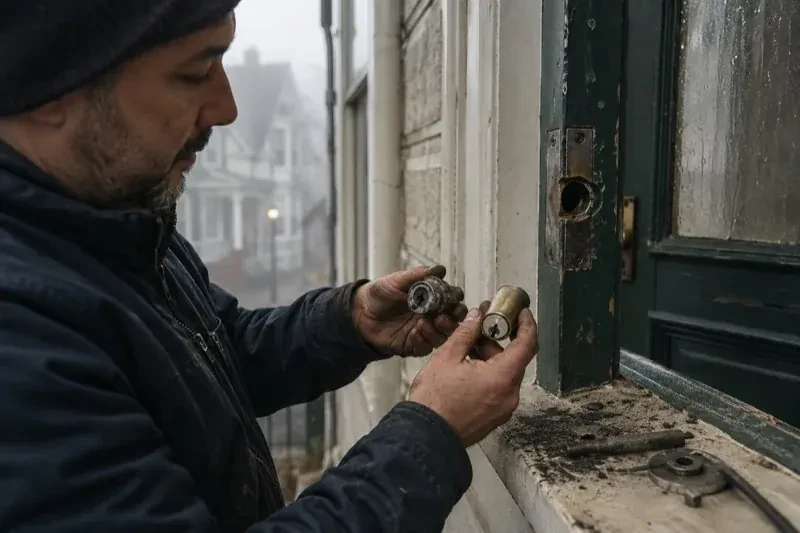
Person holding two lock cylinders beside an open painted door, with loose hardware and debris on the sill. — Seized & Jammed Lock Opening, Etobicoke

Lockouts · Etobicoke

Seized & Jammed Lock Opening

The shop's lever handle goes down as usual, but the latch inside the mortise case never pulls back. Staff are waiting on the sidewalk with their coffees, the door is locked, and the handle is simply moving air.

In plain words

Many jammed locks are not lock problems at all. Wood doors swell in humid weather and shrink in dry winter air, hinges loosen and let the door drop, and a strike plate that was fine in spring is a few millimetres out by autumn. When that happens the bolt is squeezed in its pocket and the key cannot move it. The locksmith checks this first by loading the door in different directions while working the key, and by comparing how the lock behaves with the door open. If the door is the cause, the opening is gentle and the lasting fix is a hinge, strike or seal adjustment.

Sound familiar?Etobicoke

The call
The key slides all the way in, exactly as it has for years, and then refuses to turn in either direction. Yesterday it needed a small wiggle. This morning it feels set in concrete, and pushing harder only makes the key flex.
NextHow the visit goes

Seized & Jammed Lock Opening · Etobicoke

How the visit goes

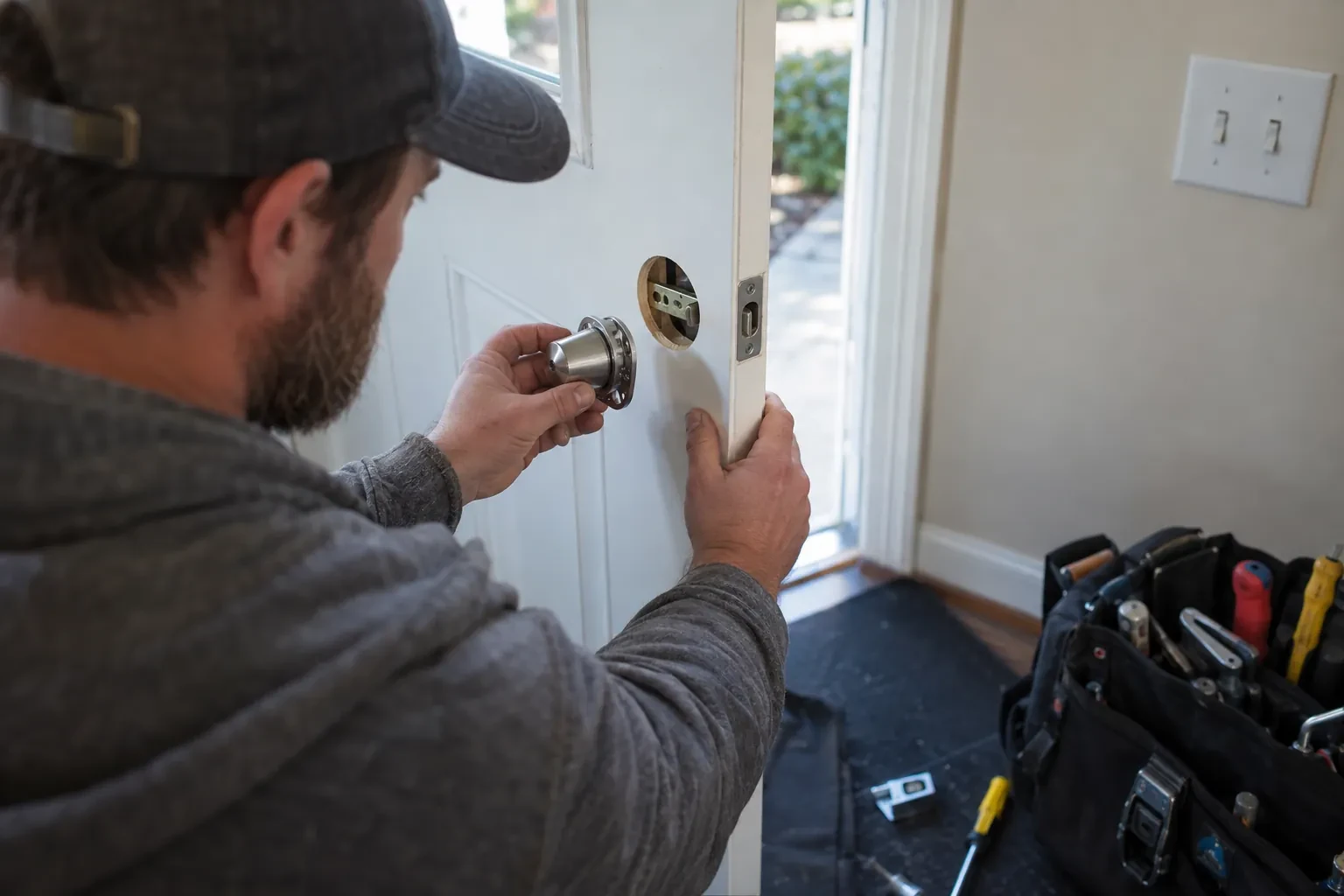
Technician holding a steel deadbolt to the round bore in a white door, with an open tool bag on a dark mat. — Etobicoke
  1. Scene 1

    What is inside the keyway

    A small mirror and a bright light show what the keyway has collected. Salt crust, sand, metal filings, sawdust from a renovation and the gummy residue of household spray oils are all common, and each reads differently: a dry gritty feel, a sticky drag, or a plug that will not accept the key to full depth. Ice shows as frost on the cylinder face and a key that stops short. A cylinder cap that has loosened lets the plug sit crooked so the pins never line up. This look decides whether the cylinder needs a flush and dry lubricant, a thaw, a re-tightened cap, or a full strip on the bench.

  2. Scene 2

    Stripping and rebuilding the cylinder on the bench

    With access restored, a cylinder that seized gets a proper service. The locksmith removes it from the door, slides the plug out with a follower so the top pins and springs stay put, and lays out the pin stacks. Everything is cleaned, worn bottom pins and tired springs are replaced, and any burr on the plug is dressed. The plug is reassembled to the same combination so your existing keys keep working, then lubricated with the product that cylinder's maker specifies and cycled until it turns with a fingertip. If the key that jammed was worn, a fresh one is cut from the code rather than from that key.

  3. Scene 3

    Keeping the cylinder clean and dry

    A serviced cylinder stays that way with very little effort. At the interval and with the product that cylinder's maker specifies, a short burst of lock lubricant into the keyway followed by a few turns of the key is enough; stay with that one product, since mixing lubricants makes a paste. Household oils, penetrating sprays and silicone meant for hinges belong nowhere near the pins, because they thicken and attract grit. Wipe the key before it goes in on a muddy or salty day. If the lock ever starts to drag, a puff of lubricant is the first response, and a call is the second.

In the van

  • Plug follower and repinning kit
  • Strike plate and hinge shims
  • Mortise case spring and hub
  • Replacement cylinder
  • Dry PTFE or graphite lock lubricant

What shapes the quoteBloordale Gardens Lock & Key Co.

Door and hinge adjustment
When the door caused the jam, hinge screws, shims, a strike move or a deepened bolt pocket are quoted as their own line beside the opening.
Matching finish and keyway
A replacement that has to match an unusual finish or a restricted keyway takes a specific part rather than a stock one, and the quote reflects the part.
Ice and salt on the day
A cylinder frozen solid or crusted with salt needs thawing, flushing and drying before it can even be diagnosed, and a winter call is quoted with that time in mind.

FeesSame any hour

Have it ready

Before you call · 0 / 3

(289) 804-4797

Questions people ask us

How long does a jammed lock opening take?

It depends on which family the jam belongs to. A bolt bound by the door is often freed in minutes and the adjustment afterwards takes a little longer. A seized cylinder needs patient cleaning before it turns and a bench service after, and a frozen one needs thawing time. A tailpiece swap is short once the door is open; a mortise case service is longer. The locksmith gives a sense of the time once the cause is identified at the door.

My keypad deadbolt is jammed and the motor just whirs. Is that the same service?

Yes, with one difference. On an electronic deadbolt the motor is trying to throw a bolt that is bound in the strike, and it strains or times out instead of driving it. Door alignment is a common cause, though batteries, corrosion, an overtightened mounting bolt, or a hardware fault can produce the same strain. The locksmith frees the bolt, adjusts the strike or hinges so it travels without resistance, checks the battery contacts, and confirms the auto-lock throws cleanly with the door closed.

My key turns all the way round but the bolt stays put. What has broken?

The key and cylinder are doing their job; the bar behind the cylinder that drives the bolt, called the tailpiece or cam, has broken, slipped or twisted out of engagement. It is a small part. The locksmith retracts the bolt through the mechanism or removes the cylinder to reach it, then fits a tailpiece of the right length and profile. Your cylinder and keys are unchanged afterwards.

Etobicokeinformation

TorontoOntario

Town
Etobicoke, Toronto
In business
13 years
Hours
Open 24/7
Nights, weekends and holidays, same fees
Visits
On-site assessment preferred. Request a visit or call.

2021 census: what it means at the door

Every square is one home in a hundred.

  • 58 in 100 homes · older homes
  • About 58% of homes in Toronto were built in 1980 or earlier, according to the 2021 Census.In neighbourhoods of established homes, keys have often been copied many times over many owners. Rekeying every exterior door to one fresh key is the common first job, and it works on old cylinders just as well as on new ones.
  • Single-detached houses make up about 23% of homes in Toronto (2021 Census).Where most homes are apartments or condos, storage lockers, bike rooms and parking gates carry their own locks. A locksmith can supply and key padlocks and cam locks for those spaces so one household ring covers everything it uses.

Source: Statistics Canada, Census Profile

Open Etobicoke in Google Maps

On-site assessment

Request a visit.

The shop's lever handle goes down as usual, but the latch inside the mortise case never pulls back.

(289) 804-4797, open 24/7.